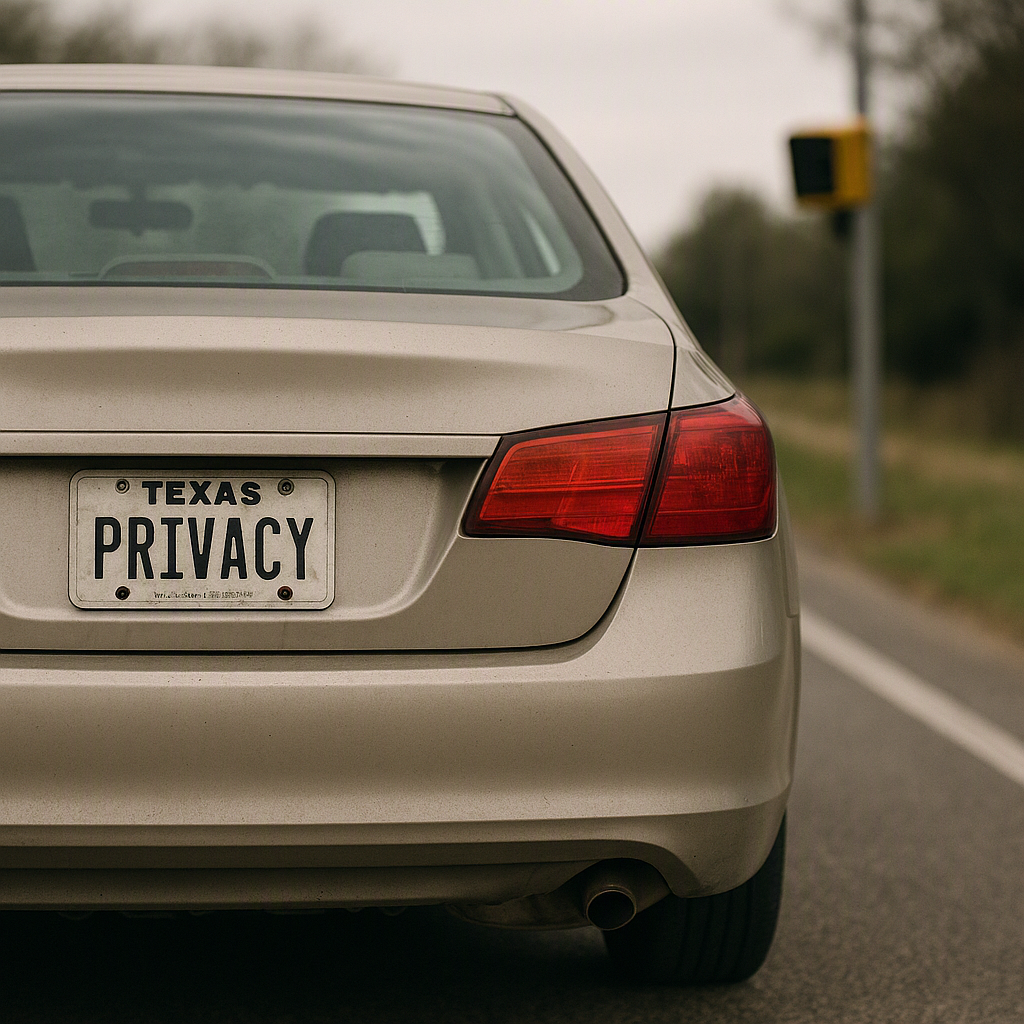
When Jasper approved Flock cameras back in March, most people didn’t think much about it. The presentation was short, the talking points sounded reassuring, and the vote passed without controversy. But it’s now late July, and the national conversation around these cameras has shifted dramatically. Communities across the country are pushing back, raising concerns, and in many cases, taking steps to remove the cameras altogether.
And they’re not doing this based on rumors.
They’re doing it based on what they can see.
Social media is full of real incidents, real interviews, and real examples of how these systems operate once they’re installed. People aren’t guessing what Flock cameras do — they’re watching it happen. Video after video. Lawsuit after lawsuit. City after city reconsidering what they signed up for.
So if Jasper’s leadership didn’t fully understand what these cameras were back in March, that’s one thing. But it’s July now. The information is everywhere. It’s hard to believe that anyone in authority could still be pushing these cameras while pretending the public doesn’t know what they’re talking about.
And that’s where the disconnect begins.
The comments on social media — coming from everyday residents — make one thing clear: people are informed. They’re not just reading local news; they’re watching what’s happening in other communities. They’re seeing the same incidents, the same reporting, the same concerns that have led other cities to rethink their contracts.
Yet here in Jasper, the response from leadership has taken a very different shape. And the message is unmistakable:
Citizens don’t understand. Citizens are misinformed. Citizens need to be corrected.
But the citizens do understand.
They’re paying attention.
They’re asking reasonable questions.
They’re watching what other communities have already learned.
So the real question isn’t whether Jasper residents understand what Flock cameras are.
The real question is why local leadership seems determined to pretend they don’t.
Public safety vs. surveillance
One of the most important distinctions in this entire conversation is the difference between public safety and surveillance. They are not the same thing, and pretending they are the same is part of the problem.
Public safety is about protecting people.
Surveillance is about tracking them.
When Flock cameras were presented to Jasper, they were framed as a simple public safety tool — something that would help recover stolen vehicles, locate missing persons, and support law enforcement. Those talking points sound reassuring, and they’re the same ones used in cities across the country.
But public safety tools don’t need to monitor every vehicle entering and leaving a community.
Public safety tools don’t need to store data on innocent people.
Public safety tools don’t need to create searchable archives of where residents travel.
Public safety tools don’t need facial‑zoom capabilities or extended retention options.
And public safety tools don’t need to hold data on innocent people for three years — which is the minimum retention period required by the state agreement Jasper already signed. Not thirty days. Three years. That detail wasn’t in the presentation and those are surveillance features.
And that’s what communities across the country are reacting to — not the idea of safety, but the reality of surveillance.
The concern isn’t that Jasper residents don’t want public safety.
The concern is that they weren’t told they were getting surveillance.
Jasper deserves tools that protect the community — not systems that monitor it.
The Data Access Problem: Who Is Really Supposed to Use These Cameras?
There’s another part of this story that hasn’t been addressed — and it matters.
At a city council meeting in September 2024, when interim police chief Mike Poindexter first introduced the idea of Flock cameras, he stated that Mr. Hopkins at JEDCO had pledged to pay for half because they could “use the data as well.” That alone raises questions. Economic development corporations do not normally use police surveillance data. They don’t need license plate scans to understand business trends or visitor traffic.
The state agreements governing Jasper’s LPR cameras restrict access to law enforcement and criminal justice personnel only. They explicitly reference federal law — the Driver’s Privacy Protection Act — and state law governing how vehicle data can be used and disclosed. JEDCO is not a law enforcement agency. Offering JEDCO access to police surveillance data as an incentive to help fund the system wasn’t a policy misstep or an oversight.
It was against the law.
And if JEDCO was offered access early on — access that state and federal law clearly prohibit — then it raises a reasonable question: who else might have been offered access or special arrangements?
Because once you establish that a non‑law‑enforcement entity was promised something by a law‑enforcement entity that the law doesn’t allow, it becomes fair — and responsible — to ask whether others were approached with similar incentives before the public ever knew these cameras were coming.
And this isn’t an abstract concern. Across the country, Flock data has already been misused by police officers — including documented cases where officers used the system to track ex‑partners, family members, and people they had personal conflicts with.
Across the country, communities are standing up and saying, “No, this isn’t what we want.” They’re not waiting for a sales pitch or a scripted reassurance. They’re looking at the evidence and making decisions based on what’s actually happening — not what they were told would happen.
So why is Jasper doubling down at the exact moment other communities are backing away?
Why insist the cameras are harmless when the national record shows otherwise?
Why dismiss citizen concerns when those concerns are backed by documented incidents?
Why act like the public is confused when the public is simply informed?
If the people don’t want it, why are you forcing it?
Getting out of the contract isn’t impossible, a basic search shows the steps clearly:
• Pass a resolution.
• Send written notice.
• Coordinate removal.
Other cities have done it. Some are doing it right now.
Jasper residents aren’t asking for anything unreasonable. They’re asking for honesty, transparency, and leadership that listens instead of dismisses. They’re asking for decisions based on evidence, not talking points. They’re asking for accountability, not PR.
Every community makes decisions based on what they know at the time — but once new information comes to light, the only responsible path is to adjust.
If other communities can look at the facts and reconsider their contracts, Jasper can too.
The only question left is whether leadership is willing to listen to the people they serve — or whether they’ll continue insisting that citizens don’t understand and push forward anyway.
Citizens do understand.
And their voice matters.
Now it’s up to Jasper’s leaders to step forward and show this community they are heard — and to choose whether they will lead with their fellow citizens or push ahead without them. The next move is theirs, and Jasper is watching.